
Call Today (210) 796-8077
Still In Pain After Knee Replacement?
There's a New Option
Genicular Artery Embolization (GAE) is a minimally invasive outpatient procedure that reduces chronic knee pain after total or partial replacement — no revision surgery, no hospital stay.
FDA-Cleared Procedure
Outpatient (go home same day)
Covered by most insurance plans including Medicare
80-85% of patients report lasting relief
Safe and effective
Watch The Video Below to Learn More
After Knee Replacement, Pain Often Persists.
GAE Targets the Cause.
Up to 30% of patients experience chronic pain after knee replacement surgery. GAE reduces abnormal blood flow to the synovial tissue responsible for swelling and inflammatory pain — without affecting the joint replacement itself.
83%
of patients report significant pain reduction within 4 weeks
60 mins
average procedure time — outpatient, no general anesthesia
No Downtime
patients can resume activity to tolerance immediately after the procedure
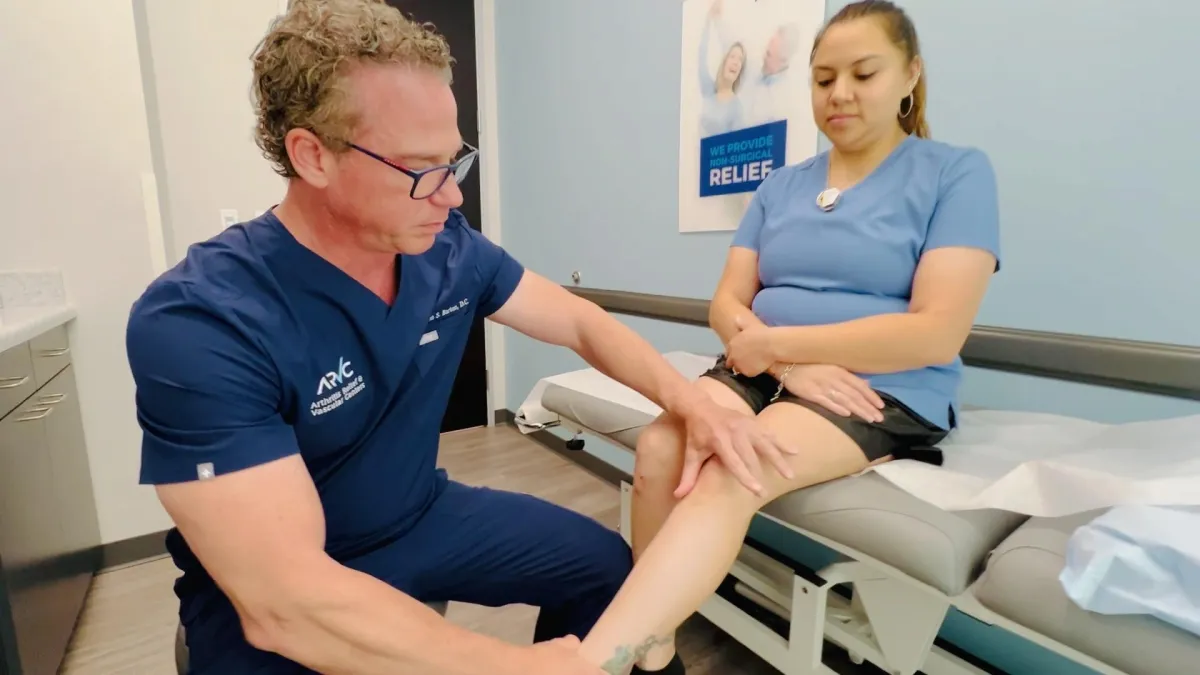
Genicular Artery Embolization (GAE) for Persistent Pain After Knee Replacement
Knee replacement surgery can relieve arthritis pain for millions of patients — but for some, inflammation, swelling, and pain continue long after recovery. If that sounds familiar, there may be a biological explanation, and a solution.
When cartilage breaks down due to osteoarthritis, your body responds by growing new, abnormal blood vessels around the joint — a process called angiogenesis. These fragile vessels become a direct pathway for chronic inflammation and pain. What many patients and even physicians don't realize is that this abnormal vessel growth can persist even after a joint replacement. The implant addresses the damaged cartilage, but the underlying vascular changes are often still active — continuing to fuel the swelling, stiffness, and discomfort you're still experiencing.
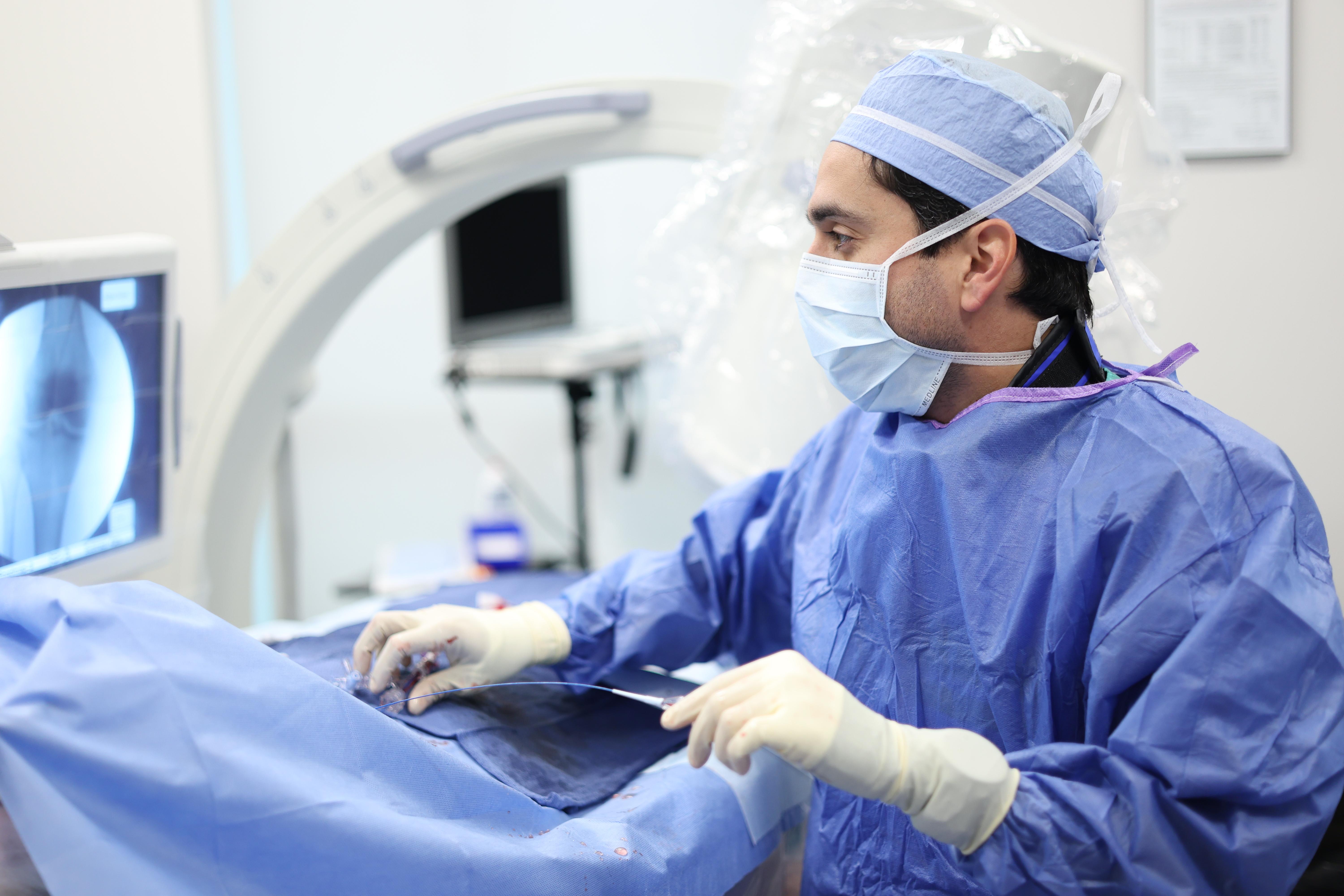
GAE is a non-surgical procedure designed to treat exactly this. During GAE, your physician uses X-ray imaging to guide a thin catheter into these abnormal blood vessels and releases small temporary embolic particles that gently block them. The particles are temporary — they dissolve naturally in about 30 minutes — making the procedure exceptionally safe, with virtually no risk of affecting healthy surrounding tissue. The particles are made from an antibiotic powder mixed with contrast to form crystals.
In the weeks that follow, inflammation quiets, joint function improves, and patients report meaningful, lasting reductions in pain — even after years of post-replacement discomfort.
If your knee replacement didn't deliver the relief you expected, persistent angiogenesis may be why. GAE offers a targeted, minimally invasive path forward.
WHY IT WORKS
Angiogenesis — the abnormal vessels that drive arthritic pain.
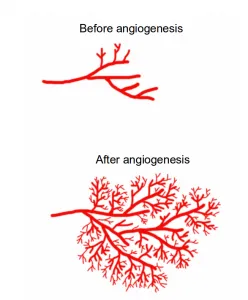
In arthritic joints, abnormal new blood vessels (angiogenesis) sprout into the joint lining, carrying inflammation and pain signals. Embolization quiets these vessels — addressing the source, not just the symptom.
THE TREATMENT PROCESS
Pinhole Access 01
Under IV Sedation and local anesthetic, a small catheter is guided through a needle-sized opening in the groin — no incisions, no stitches.
Targeted Particles 02
Under X-ray guidance, temporary embolic particles are released into the abnormal genicular vessels — and dissolve naturally.
Quiet the Pain 03
Inflammation eases, joint function improves, and pain steadily reduces over the following weeks.
Before & After embolization.
Live X-ray images from three of our patients — showing the abnormal blood flow that drives arthritic pain, and how it quiets after treatment.
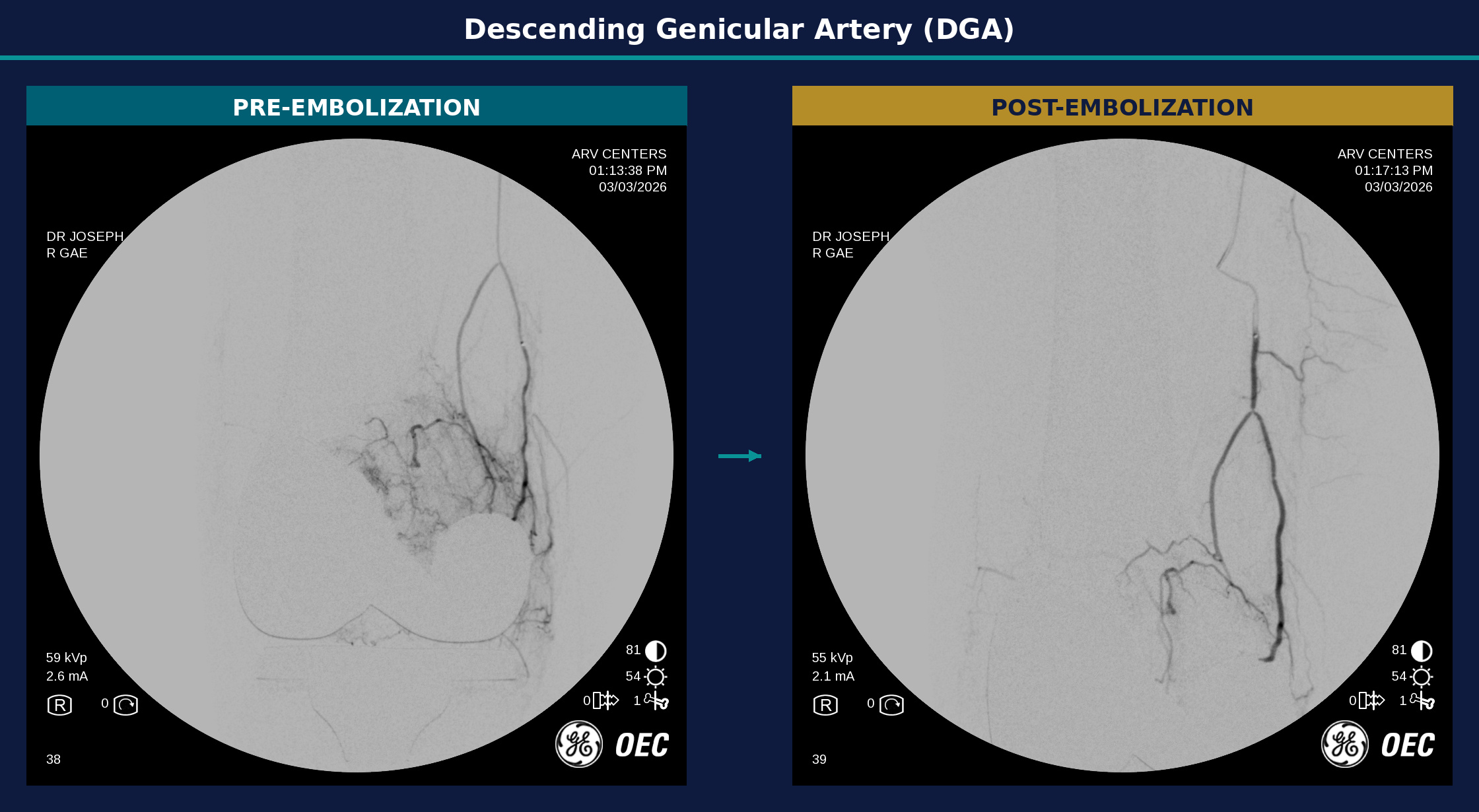
Descending Genicular Artery
Pain at the front and inside of the knee. The pre-image shows the abnormal blush or shading of inflamed vessels at the joint capsule; after embolization, that blush is gone and only the normal trunk remains.
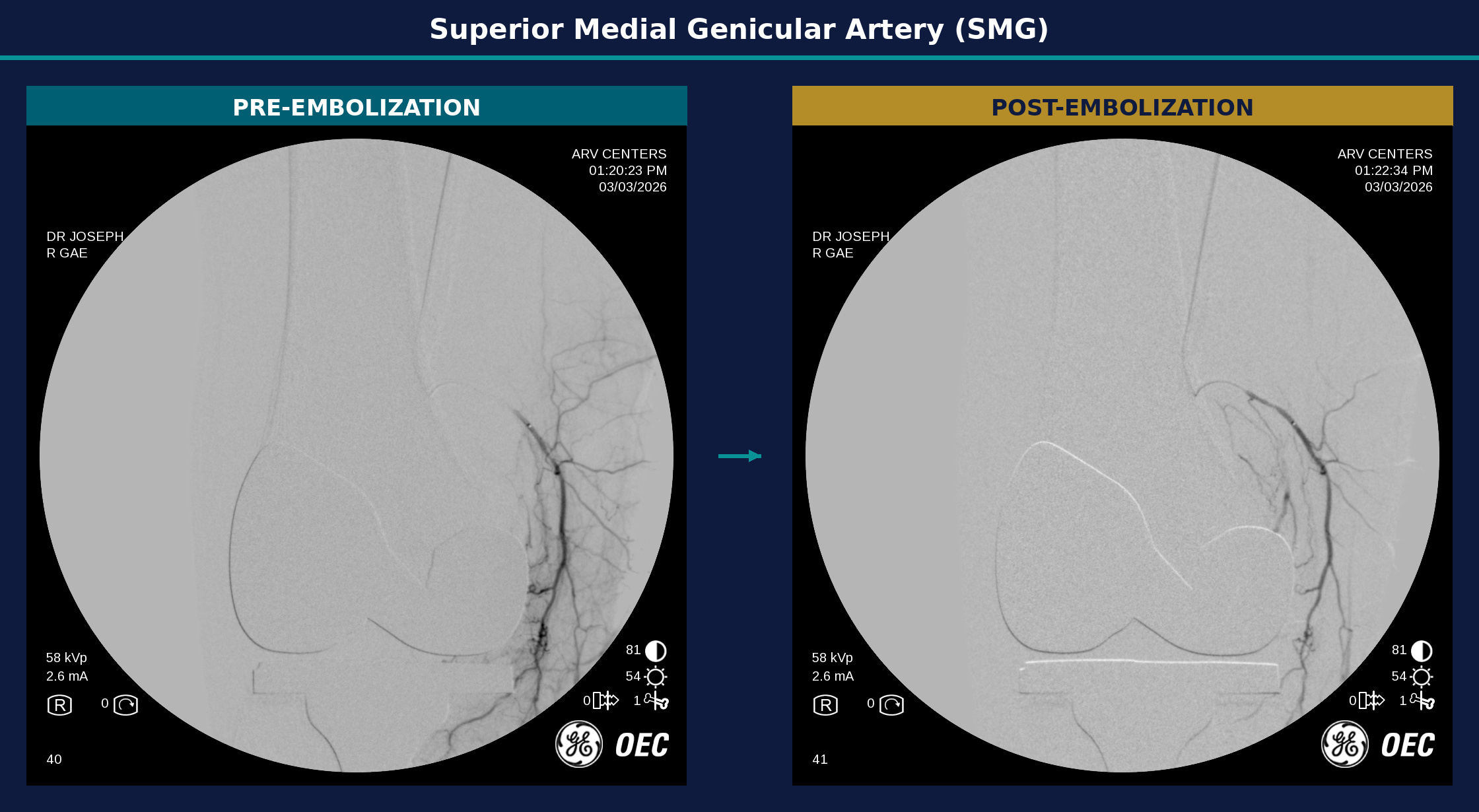
Superior Medial Genicular Artery
Pain along the inner upper knee. The dense, disorganized network of blood vessels feeding the synovium quiets after treatment,while the main artery to the joint stays open and intact.
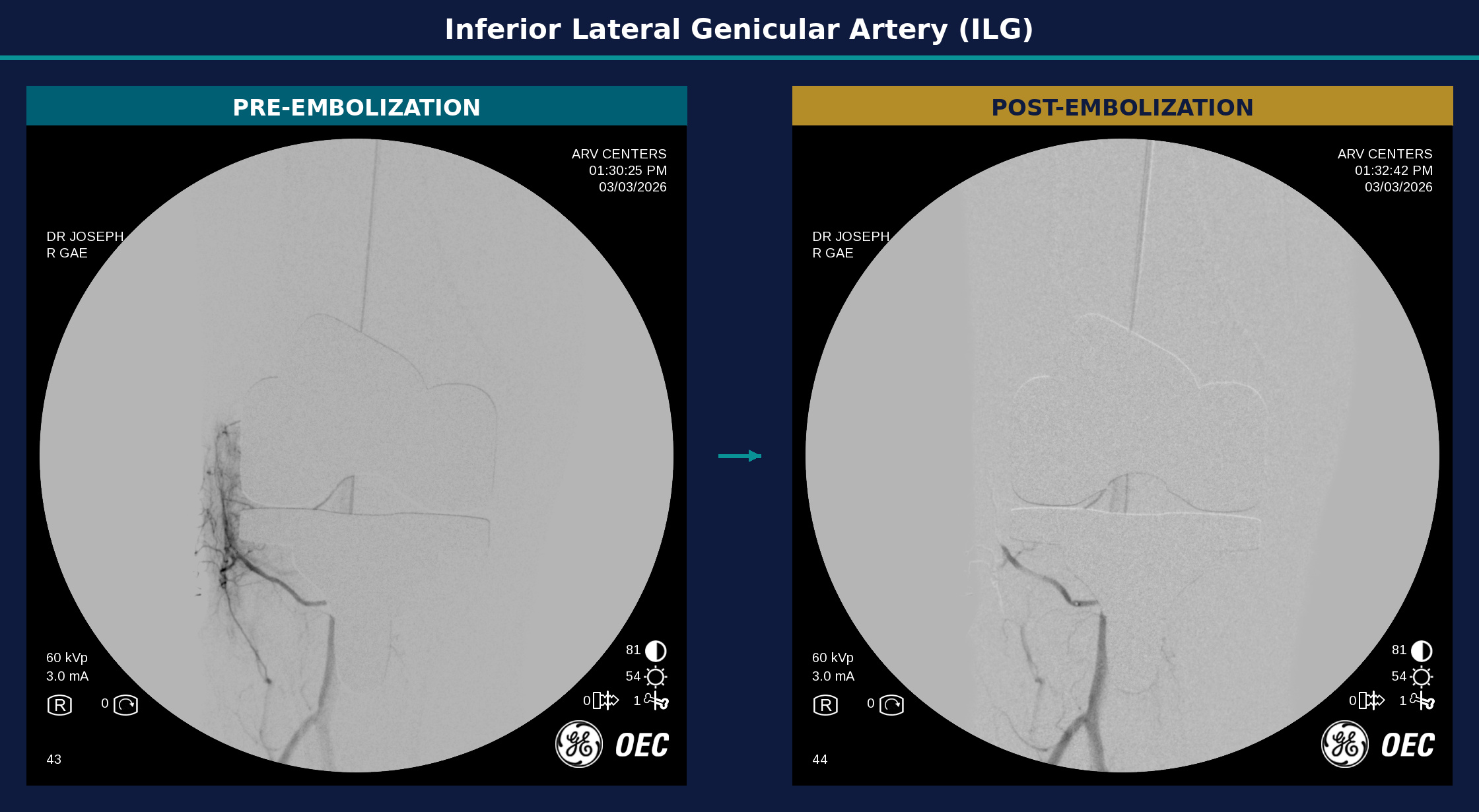
Inferior Lateral Genicular Artery
Pain along the outer lower knee. After selective embolization,the abnormal hypervascularity resolves — normal flow to surrounding tissue is preserved.
Genicular Artery Embolization (GAE)
Patient Journeys
Can This Fix Knee Pain Without Surgery?
How Dolores Fixed Her Knee Pain After 10 Years!
"I Had 23 Knee Surgeries Before 60: What Happened Next Will Surprise You!" -Maggie G.
Meet Our Physicians

Lisa D. Persyn, M.D.
Board Certified Physical Medicine & Rehabilitation
Dr. Lisa Persyn is Board Certified in Physical Medicine and Rehabilitation. Dr. Persyn earned a Bachelor of Science in Molecular Biology and Bachelor of Arts in Psychology, both with Honors from the University of Texas at Austin and her Doctor of Medicine degree from The University of Texas Health Science Center at San Antonio.

Arthur S. Joseph, D.O., MPH
Board Certified Vascular & Interventional Radiology
Dr. Joseph is an accomplished Interventional Radiologist with a passion for delivering minimally invasive, image-guided procedures to improve patient outcomes. He is Board-Certified in Diagnostic and Interventional Radiology by the American Board of Radiology.

Samy A. Al-Bayati, M.D.
Board Certified Vascular & Interventional Radiology
Dr. Samy Al-Bayati is an accomplished physician with extensive experience in both Urology and Interventional Radiology. He currently serves as a faculty member at the University of Texas Health Science Center in San Antonio, Texas.
Find Out If You Qualify For GAE
Our care team will review your case and determine if you are a candidate.
Call (210) 796-8077 Today or Click Below to Schedule Online

FOLLOW US


COMPANY
CUSTOMER CARE
Copyright 2026. Arthritis Relief & Vascular Centers. All Rights Reserved.